What Is the Pelvic Floor — and Why Should You Care?
If you've never thought about your pelvic floor before, you're not alone. Most people go years without having to think about their pelvic floor, where these muscles are, what they do or why the matter. Ideally these muscles work silently in the background. However, when we start experiencing pelvic floor muscle dysfunction in the form of leaking urine, pelvic pain or pain with sex the pelvic floor may be a set of muscles you need to familiarize yourself with.
As a pelvic physiotherapist in Cambridge, Ontario, one of the most common things I hear from new patients is: "I wish someone had told me about this sooner." This post is your starting point. Let's break down exactly what the pelvic floor is, what it does for and when it might be time to get some support.
What Is the Pelvic Floor? A Simple Explanation
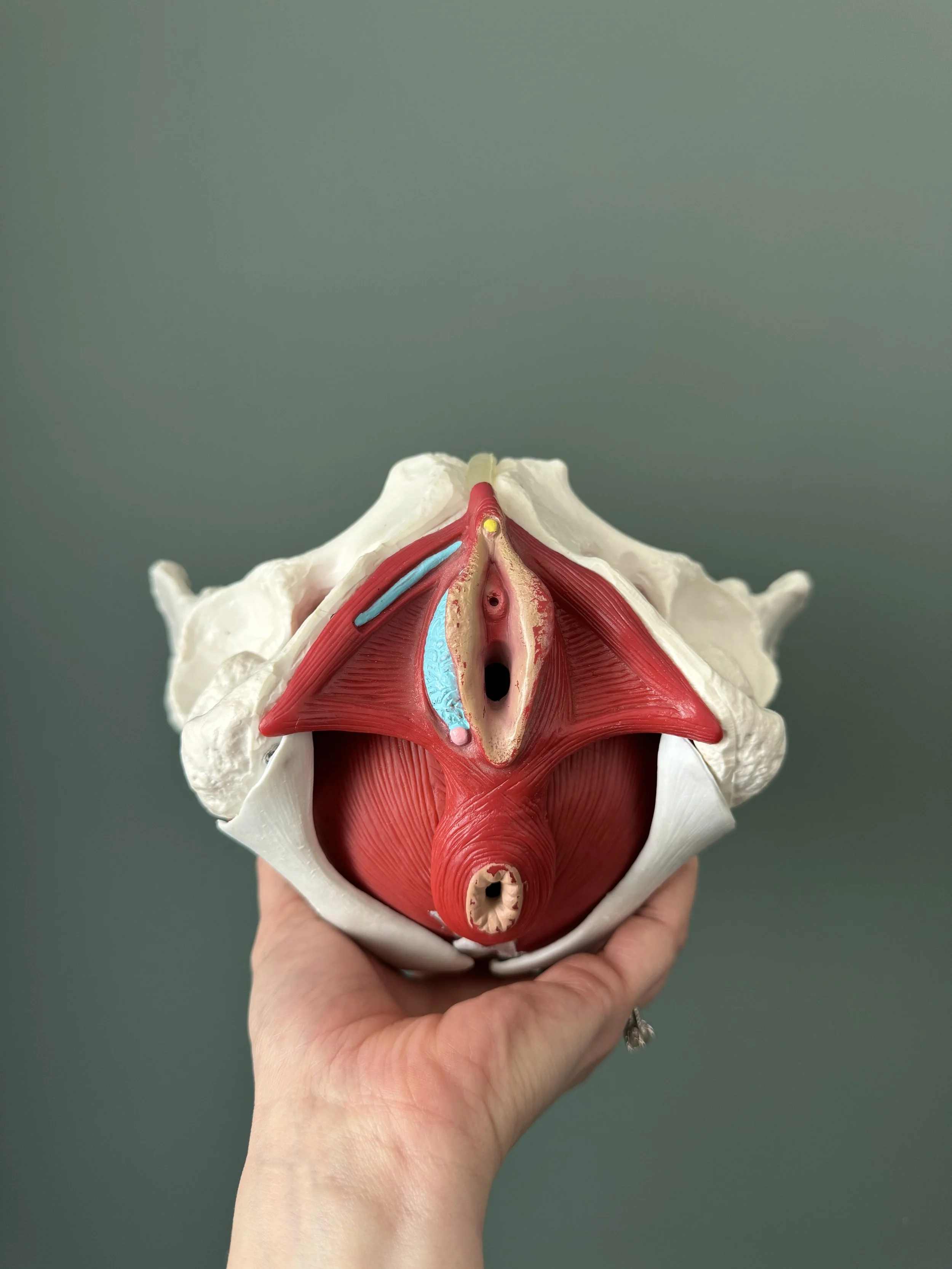
The pelvic floor is a group of muscles that sit at the base of your pelvis — it looks like a bowl or hammock that slings from your tailbone at the back, to your pubic bone at the front and then from one sit bone to the other. There are actually 3 layers of muscle and connective tissue.
Every body has a pelvic floor!
The pelvic floor, despite what popular media would have you believe, is not just a “women’s issue” – people of all genders have a pelvic floor and can experience pelvic floor dysfunction.
Where exactly is the pelvic floor?
If you were to sit on a hard chair and feel the pressure of your sitting bones, your pelvic floor sits in that region — forming the floor of your pelvis. The muscles attach to the bony ring of your pelvis and support everything above them.
What Does the Pelvic Floor Do? 5 Key Functions
The pelvic floor does far more than most people realize. Here are the five core jobs these muscles are doing around the clock:
1. Sphincteric - Bladder and bowel control (continence)
The pelvic floor muscles squeeze around the urethra and rectum to keep things in until you're ready to go. When these muscles are too weak, you may experience leakage — what we call urinary or fecal incontinence. When they're too tight or uncoordinated, you may struggle to fully empty your bladder or bowel.
2. Supporting your pelvic organs
Your bladder, uterus (if present), prostate (if present) and rectum are all supported by the pelvic floor. For vulva owners, when this support is compromised, you may develop pelvic organ prolapse — a condition where one or more organs descend into or beyond the vaginal canal. This can sometimes be seen post childbirth, with constipation or postmenopausal.
3. Sexual function
The pelvic floor plays a direct role in sexual sensation, arousal, and function. For people with vaginas, these muscles support the nerves that help with sensation. When these muscles carry extra tension sex can sometimes become painful. For people with penises, pelvic floor dysfunction can contribute to erectile difficulties or pain with ejaculation.
4. Stability and movement
The pelvic floor is part of your body's deep core — alongside your diaphragm, deep abdominal muscles, and deep back muscles. This group works together to support your spine and pelvis during movement. When this system is out of balance, it can contribute to low back pain, hip pain, or difficulty with functional activities.
5. Sump-pump
The pelvic floor acts as a pump helping to shunt fluid (blood and lymph) from the lower extremities into the abdomen towards your heart and vice versa.
Signs Your Pelvic Floor Might Need Attention
Because the pelvic floor is involved in so many functions, symptoms can show up in surprising ways. Here are some common signs that your pelvic floor may not be working optimally — and that pelvic physiotherapy could help:
• Leaking urine when you laugh, sneeze, cough, or exercise (stress incontinence)
• A strong, sudden urge to urinate that's hard to control (urgency incontinence)
• Going to the bathroom very frequently — or getting up multiple times at night
• Difficulty fully emptying your bladder or bowel
• Constipation, straining, or bowel urgency
• Pain during or after sex
• Pain with tampon insertion
• A feeling of heaviness or pressure in the pelvic area
• Persistent low back pain or hip pain that isn't responding to other treatment
• Pelvic pain during pregnancy or postpartum recovery that isn't resolving
It's worth saying this clearly: these symptoms are common — but they are not something you simply have to live with. Many people assume leaking, pain, or urgency are just a normal part of ageing or having children. They're not and we can do something about them!
What Is Pelvic Physiotherapy and How Can It Help?
Pelvic physiotherapy (also called pelvic floor physiotherapy) is a specialized area of physiotherapy focused on assessing and treating the muscles, connective tissue, and nerves of the pelvic floor and surrounding region.
A pelvic physiotherapist completes additional training beyond their general physiotherapy degree, specifically to assess and treat these muscles — both externally and, when appropriate and consented to, internally.
Ready to Learn More About Your Pelvic Health?
If anything in this post resonated with you — whether you recognized a symptom, have been putting off getting help, or simply want to understand your body better — I'd love to connect.
At Base Pelvic Health in Cambridge, I offer a safe, evidence-informed, and inclusive space to explore your pelvic health. Serving patients across Cambridge and the Tri-City area (Kitchener, Waterloo, and beyond), my goal is to give you the knowledge and support you need to feel confident in your own body.